‘I had a go and I was hooked’ – inside Jesmond’s 130-year old real tennis court
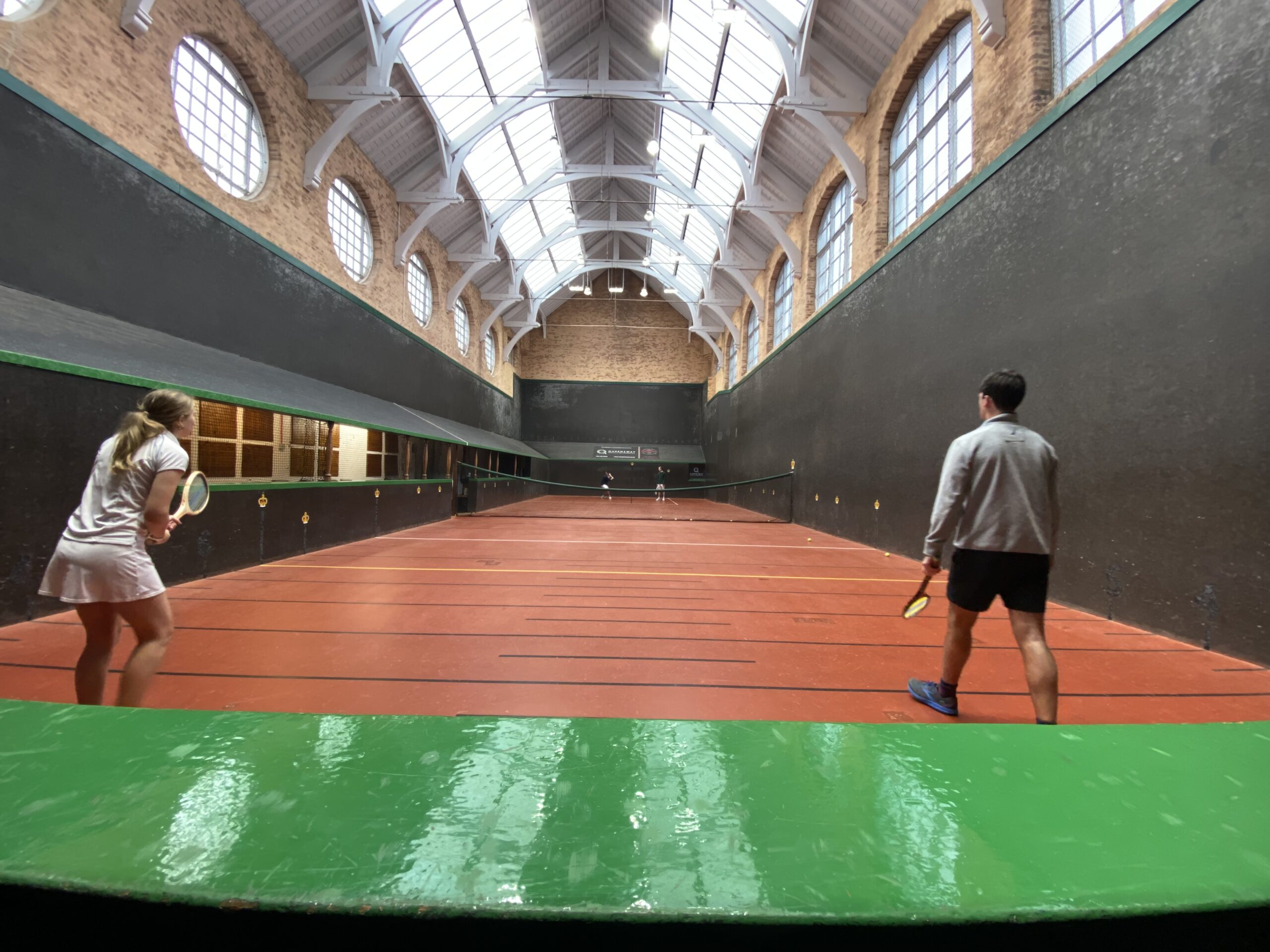
Jesmond is host to one of the oldest sports in the country – with its court built in 1894, real tennis’ quietly lays claims to more technique, strategy and spectacle than many modern day racket sports.
One of just 46 courts worldwide and 27 in the UK, the Jesmond Dene court sits on Matthew Bank between Jesmond and South Gosforth, only a few miles from Newcastle city centre. Built in 1894, it remains in regular use and now has more members than at any point in its history.

JesmondLocal spoke to head professional Mark Eadle who explained how he discovered the game. “I got chucked out of a professional football club as an 18-year-old, and didn’t want to work for my dad either, so I walked into one of these courts when I was 18 and I just thought it was David Lloyd, that it was a normal tennis club. I just had to have a go and I was hooked, I loved it.”
That chance encounter would shape the next 25 years of his life. Eadle went on to build a career in real tennis, coaching full-time, competing internationally, helping the build of a new court in a school and assisting on creating new rackets and balls for the game. He has helped to grow the sport far beyond the court where he first picked up a racket.
Despite the name, real tennis should not be confused with the modern outdoor game. It is a different sport altogether, combining elements of lawn tennis and squash, and is played entirely indoors. The balls are handmade and solid, similar to a cricket ball rather than a tennis ball, while the wooden rackets have a very small head, making the game more technically demanding.
One of real tennis’s most distinctive features is its use of handicaps, allowing players of all abilities to compete equally. In many handicap matches, it is often the stronger players who feel the greatest pressure.
“It’s been really good the last six months,” said Eadle. “We have a lot more students playing. And now they’re integrating much more with the members. And if you look at the students, they want to probably go into finance, they want to work in the city, so they just end up sitting here with my members now, and it’s a great part of their education, you know. I’ve got brilliant members – we haven’t got masses but because the club is so small, it means we get to know our members really well. It’s one of the parts that I really liked about this club.”
That growing enthusiasm and accessibility is reflected in the club’s playing community, which now includes a mix of long-standing members, students and newer players. With more people regularly picking up a racket, the club has begun to look beyond Jesmond, taking on fixtures that connect it with the wider real tennis world.
In recent months, the Jesmond Dene real tennis team has travelled to Cambridge to compete in a series of high-level matches, giving local players the chance to test themselves against some of the country’s strongest opposition. For many, it was their first experience playing away from the north east and a reminder that this small Jesmond club is part of a much wider real tennis community.
Mary Van Den Arend, third year student at Newcastle told JesmondLocal: “I started real tennis in my first year of university here. I had played lots of tennis before so I thought that would make it a little easier for me but it was very tricky to pick up the new techniques and change my style of play thanks to the heavy balls and small racket heads, I had to focus a lot!”
Amelia Wilson, another third year student at Newcastle went down to play in the series of matches in Cambridge. “I loved going down to Cambridge, although we didn;t win,” she said. “It was really fun to experience real tennis on another court and with other players.”
Real tennis has been part of the UK and Jesmond’s sporting history, and with player numbers steadily increasing over the last 15 years, hopes remain high for continued growth in membership. While the sport’s techniques are highly strategic and its similarities to modern tennis quickly fade, Eadle believes that challenge is part of its appeal. “The racket is heavy and it’s not the easiest thing, but then there’s something so rewarding about that.” It is this sense of satisfaction that continues to draw new players to the game.
In hopes of attracting more players and future members to the game, Eadle has offered a free introductory coaching lesson for players who would like to get involved with the game and who mention JesmondLocal at the club.